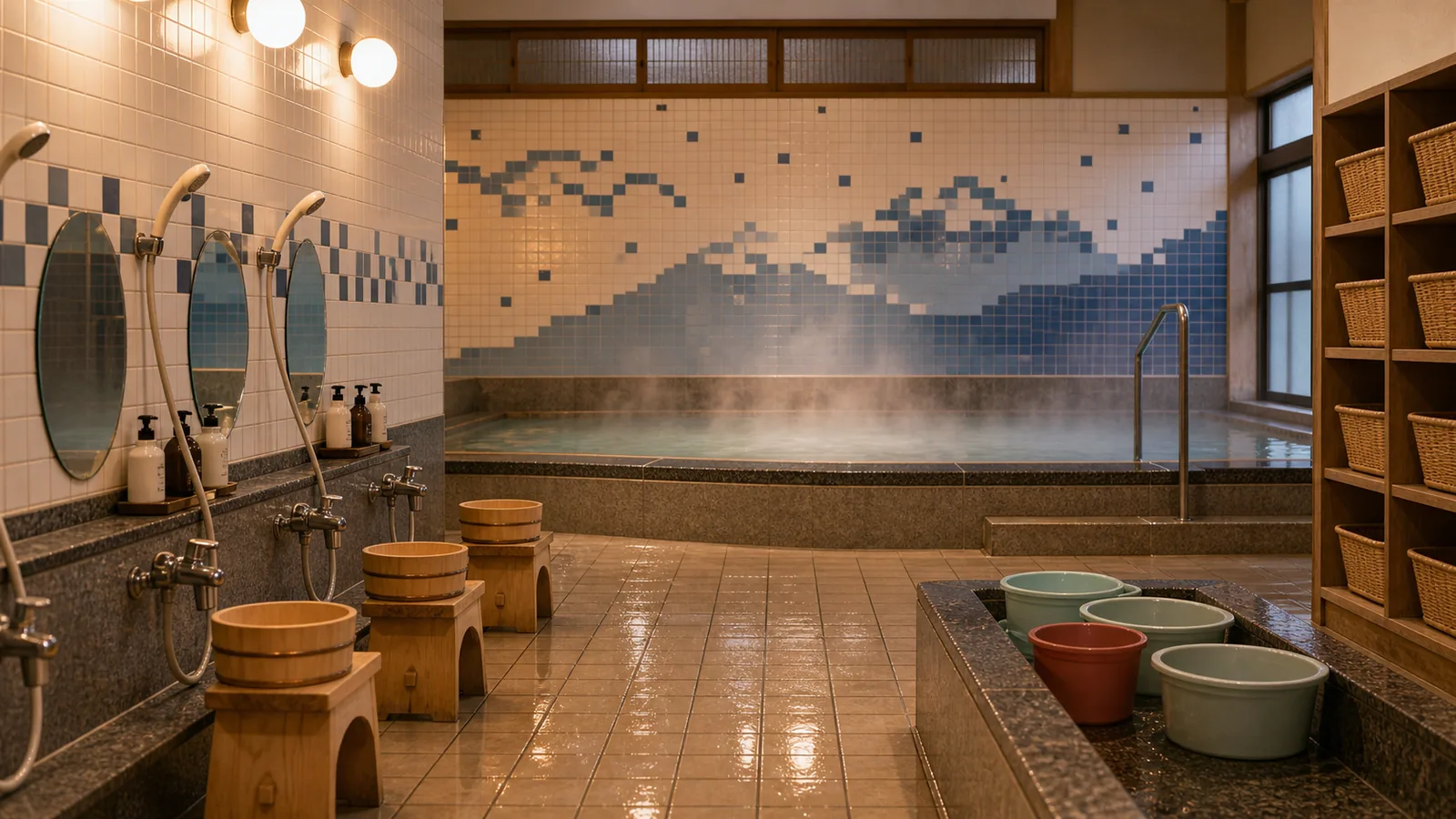
Many travelers heading to Japan only think of onsen (Hakone, Izu, Kusatsu), yet tourists staying in central Tokyo or Osaka walk past an “old-school Japanese bathhouse” every day in the alleys — 「銭湯」 (sento). A sento is not an onsen. It is the “everyday bathing space” for urban residents, with affordable admission (550 yen for adults in Tokyo through July 31, 2026, and 600 yen from August 1), open until midnight, modest facilities but a homey atmosphere. This article unpacks the five key differences between sento and onsen, plus tourist-friendly sento etiquette.
Definitions first: sento versus onsen — Sento (せんとう): general public bathhouse, using heated tap water, with no natural spring components. Historically a standard fixture in old Tokyo and Osaka neighborhoods, providing bathing space for residents without home bathrooms. — Onsen (おんせん): uses natural underground hot-spring water (defined by legally required mineral content), typically located in regional hot-spring towns (Hakone, Beppu, Noboribetsu).
Difference 1: water source Sento = boiled tap water (similar to the hot water in your home). Onsen = mineral spring water emerging from underground (sulfur, bicarbonate, sodium, and other types). So onsen are marketed with therapeutic claims (joints, skin, circulation), while sento are simply “clean hot water.” Sento pools are correspondingly small and simple; onsen often feature outdoor baths, rock baths, cypress baths, and many other designs.
Difference 2: price Tokyo sets a maximum adult sento fee: 550 yen through July 31, 2026, and 600 yen from August 1, according to the Tokyo Metropolitan Government announcement. Osaka, Kyoto, and other prefectures set their own rates, so check the local official price before visiting. Towels, toiletries, and sauna access often cost extra. Onsen ryokan usually cost 15,000 to 50,000 yen per night, and day-trip onsen facilities run 1,000 to 3,000 yen. So sento is the economical “everyday bath” while onsen is the “vacation experience.”
Difference 3: location Sento are abundant in central Tokyo and Osaka. You will spot one in the alleys by its tall chimney (for heating the water), with a 「ゆ」 noren (curtain) hanging at the door — that is a sento. A Google Maps search for “銭湯” will pull up every nearby option. Onsen are mostly in regional towns, requiring a dedicated trip.
Difference 4: equipment and style — Sento: simple and unpretentious. Separate men’s and women’s baths, each with two to three pools (warm, hot, cold), a wash station (arai-ba) along the wall, and sometimes herbal baths, electric baths (mild current), or sauna (extra charge). Walls often feature a Mount Fuji mural (the classic sento backdrop — only three artists in all of Japan still paint these murals today, making them increasingly precious). — Onsen: luxurious, focused on atmosphere. Outdoor baths, cypress tubs, stone construction, private rentals (kashikiri).
Difference 5: clientele and atmosphere Sento clientele consists mainly of local residents, the elderly, and nearby office workers. The atmosphere feels like a neighborhood gathering — old men greeting each other, watching TV, chatting. Tourists visiting sento experience “real Japanese daily life.” Onsen ryokan clientele leans toward tourists and vacationing families, with a more refined and quiet atmosphere.
Sento etiquette: nearly identical to onsen The core etiquette at sento matches onsen (see the “Complete Onsen Etiquette Guide”): — Bathe fully nude (no swimsuits). — Wash thoroughly at the wash station before entering the pool. — No towels in the water. — No swimming, no loud talking.
Sento-specific details — Payment and bath supplies: pay the current local fee at the counter, where you can also buy soap, shampoo, or a small towel (if you forgot). Insert a 100-yen coin for the shoe locker (returned on the way out). — The shoe locker and changing room: place shoes in the locker → enter the changing room → undress and place clothes in a numbered metal basket (unlocked, on trust) → walk into the bathing area. — The 「番台」 or counter: traditional sento have a bandai — a raised platform between the men’s and women’s baths where an older proprietor sits. Newer sento use a separate front counter without a bandai. — Sauna costs extra: most sento charge an additional 200 to 300 yen for the sauna, with a token purchased at the counter before entry.
Notable sento recommendations — Tokyo, Kosugiyu (Koenji): the most Instagram-famous sento in Tokyo, with contemporary art-style wall murals and a youthful atmosphere. — Tokyo, Musashi-Koyama Onsen Shimizu-yu: a sento with actual underground hot-spring water (rare), giving you natural black-water onsen for the standard sento admission fee. — Kyoto, Funaoka Onsen: founded in 1923 and registered as a National Tangible Cultural Property, featuring wood-carved railings, stained glass, and immense historical character. — Osaka, Genga-bashi Onsen: a century-old traditional Osaka sento where the rooftop sign, noren curtain, and tiles are all heritage pieces.
Pro tip: a sento is the best starting point for “local tourism” If you want to experience true Japanese daily life, find a sento within a 10-minute walk of your hotel and step in one evening after dinner — you will see real local faces of older neighbors, students, and office workers, glimpses of Japan that neither Airbnb nor tourist attractions reveal. Kosugiyu in Tokyo and Funaoka Onsen in Kyoto both welcome foreign guests and have English signage. A hand-towel-sized small towel, soap, and shampoo can all be bought at the counter for under 220 yen, so showing up empty-handed is no problem. Next time in Japan, set aside an hour one evening, and the standard admission fee will take you into the heart of everyday Japanese life.
Frequently Asked Questions
What is the difference between sento and onsen?
Sento is a public bathhouse format, usually with heated tap water. Onsen refers to natural hot spring water meeting legal criteria.
How does Tokyo’s adult sento fee change in 2026?
It is 550 yen through July 31, 2026, then rises to 600 yen on August 1, 2026. Towels, toiletries, and sauna access often cost extra.
Do I need to bring my own bath items?
A towel helps, but many sento sell or rent small towels, shampoo, and body soap. Cash is safest at older shops.
Can I take photos in a sento?
No. Do not photograph changing rooms, washing areas, or bath spaces, even if nobody is visible.