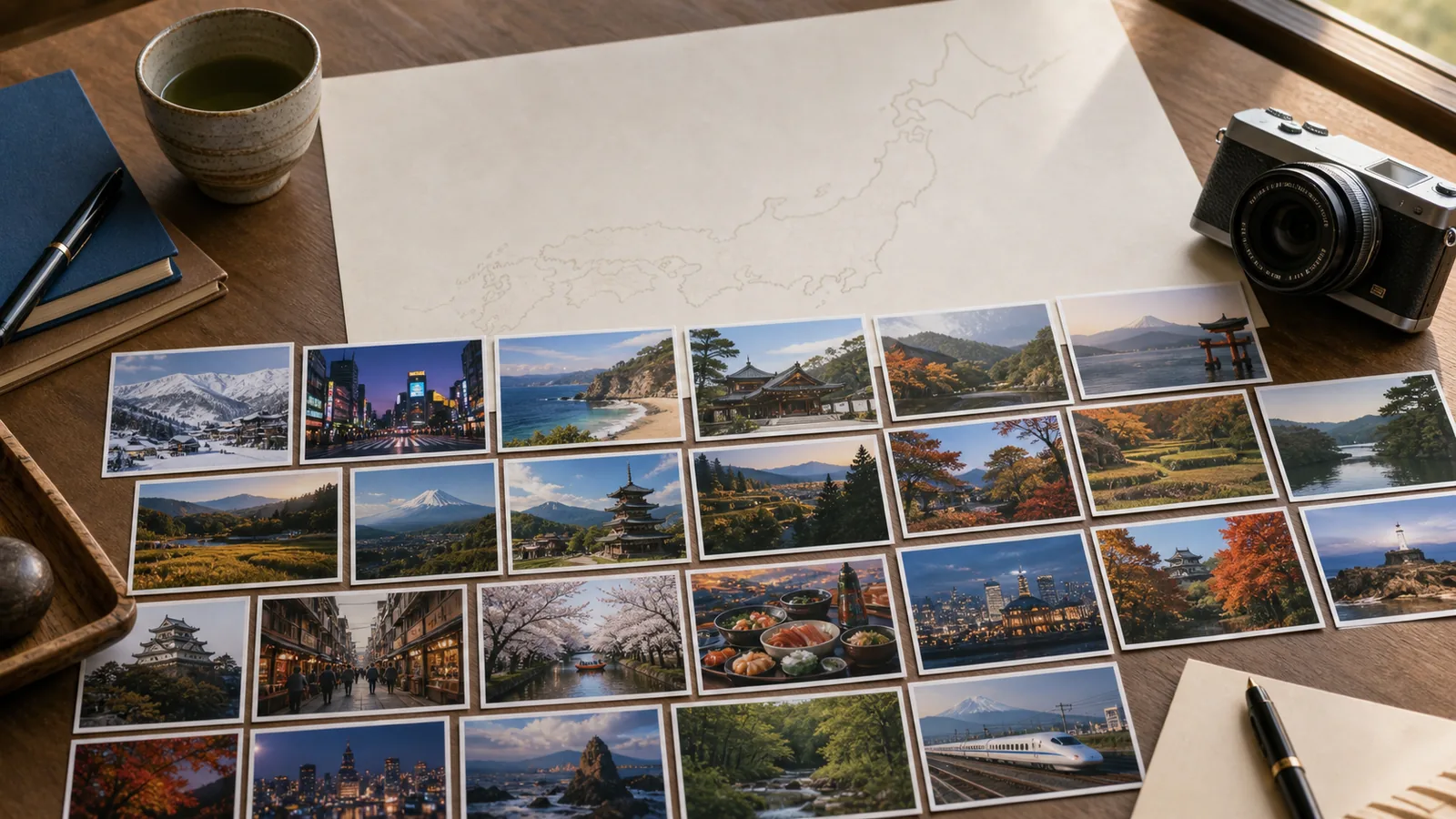
Japan administrative divisions are called todofuken (prefectures), which sounds complicated but actually splits into just 4 types: 1 to (Tokyo), 1 do (Hokkaido), 2 fu (Kyoto and Osaka), and 43 ken, for 47 in total. Why the different labels? Historical baggage — during the Edo era, fu marked political strongholds (Kyoto-fu, Osaka-fu), ken became the post-reform general administrative units, to is reserved for the capital, and do covers Hokkaido due to its sheer size.
Memorizing all 47 is pointless for tourists; remembering the top 10 is enough. Below are the TOP 10 most-visited and best-value picks for Chinese, Taiwanese, and English-speaking tourists.
1. Tokyo (14 million) The capital. Shinjuku, Shibuya, Asakusa, Ginza, Akihabara, Odaiba — no explanation needed. Must-visit: Tokyo Skytree, Meiji Shrine, Tsukiji Outer Market, Ueno Park, Tokyo Disney. Best season: spring cherry blossoms (late March to early April), autumn foliage (late November).
2. Kyoto (2.55 million) The top pick for ancient capitals. Must-visit: Kiyomizu-dera, Fushimi Inari, Kinkaku-ji, Ginkaku-ji, Arashiyama, Gion, Nijo Castle, Byodo-in. Best season: spring cherry blossoms (Philosopher Path), autumn foliage (mid-November to early December, Tofuku-ji), winter snow (Kinkaku-ji in snow is gorgeous).
3. Osaka (8.8 million) Eating, shopping, plus Universal Studios. Must-visit: Dotonbori, Shinsaibashi, Osaka Castle, Shinsekai, Kuromon Market, USJ. Osaka is the West Japan transit hub and works as a Kansai base. Best season: any time of year, though midsummer (July-August) is muggy and best avoided.
4. Nara (1.32 million) An ancient capital older than Kyoto (became capital in 710). Must-visit: Todai-ji (Great Buddha plus deer), Kasuga Taisha, Kofuku-ji, Nara Park. Deer roaming the streets are pure therapy. 45 min by JR from Kyoto. Best as a day trip.
5. Hokkaido (5.41 million) Summer cool, winter skiing. Must-visit: Sapporo, Otaru, Hakodate, Furano (summer lavender), Niseko (winter skiing), Shiretoko (wildlife). Winter is most popular but travel costs run 50% higher. Best season: June-August summer, December-March winter snow.
6. Okinawa (1.46 million) Japan only subtropical island chain. Must-visit: Naha, Shuri Castle, Churaumi Aquarium, Ishigaki Island, Miyako Island. Like Japan Hawaii, with crystal-clear water. Best season: April-June and September-November (avoid typhoons plus summer break crowds).
7. Kanagawa (9.23 million) A satellite prefecture next to Tokyo, but strongly independent. Must-visit: Yokohama (Chinatown plus Minato Mirai), Kamakura (ancient capital plus Great Buddha plus Enoshima), Hakone (hot springs plus Mount Fuji views). Doable as a day trip from Tokyo.
8. Hiroshima (2.77 million) Historically heavyweight sights plus great food. Must-visit: Peace Memorial Park plus the Atomic Bomb Dome (World Heritage), Miyajima Itsukushima Shrine (the torii in the sea), Hiroshima-yaki (different from Osaka-yaki). 1 hr 20 min from Osaka by Shinkansen.
9. Nagano (2.02 million) The Japanese Alps plus snow monkeys plus old castles. Must-visit: Matsumoto Castle (one of 5 surviving national-treasure castles), Jigokudani snow monkeys (monkeys bathing in hot springs), Hakuba ski resorts, Kamikochi. Best season: winter snow and summer cool.
10. Gifu (1.99 million) Home to the Shirakawa-go World Heritage Site. Must-visit: Shirakawa-go (most beautiful in snow season), Takayama old streets (a "Little Kyoto"), Gero Onsen (one of Japan three great hot springs). 2 hours from Nagoya. Shirakawa-go illuminations in winter are a Japanese postcard scene.
Next wave worth considering:
- Fukuoka (Kyushu capital plus ramen),
- Hyogo (Kobe plus Himeji Castle plus Kinosaki Onsen),
- Shizuoka (Mount Fuji plus tea plus eel),
- Kumamoto (Kumamoto Castle plus Mount Aso),
- Aichi (Nagoya plus Nagoya Castle).
How to use this ranking 5 days: 1+3+4 (Tokyo plus Osaka plus a day in Nara) 7 days: 1+2+3+4 (Tokyo plus Kyoto plus Osaka plus Nara) 10 days: 1+2+3+4+9 (add Nagano) or 1+2+3+4+5 (add Hokkaido) 12-plus days: 1+2+3+4+7+8 (add Hakone plus Hiroshima)
For your next trip, match this list against your day count and avoid the "want to visit lots of prefectures" trap — losing half your itinerary to travel time is painful. Less, but better is the truth of independent travel in Japan.